
energy
Qualitative Analysis
1 Renewable Energy Use
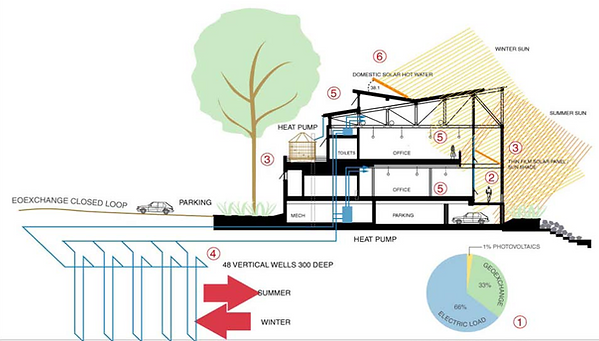
Renewable Energy Use illustration
Source: Smithgroup
-
Renewable energy sources account for 34% of the building’s energy load. Thus reducing its dependence on fossil fuels
-
The building was oriented and formed to maximize natural ventilation through operable windows
-
Photovoltaics systems are integrated with building’s architecture as sun shades and skylight
-
Geothermal exchange uses the earth’s stable temperature to regulate indoor air condition
-
Daylight has been maximized by the building’s orientation and fenestration. Sensors dim and turn-off artificial lighting as daylight satisfies the established light level, thus reducing the electric load.
-
Domestic solar hot water is implemented to reduce energy on heating water
2 PV System
A 4.2-kW, thin-film PV system is mounted on the south side of the building. The panels are inclined at an angle of 30° and face approximately south. Three inverters feed the energy into one of the building electrical panels on the second floor.
Renewable energy sources provide approximately 30% of the building's energy load. Solar hot water heating provides all the domestic hot water for the building, saving approximately 120 kilowatt-hours (kWh) of electricity per day. A 4 kWh photovoltaic system helps offset a portion of the building’s electrical load.

PV Arrays
Souce: National Renewable Energy Laboratory
3 HVAC System
Ground Source Heat Pump System
-
The Merrill Center uses a ground source heat pump system for heating and cooling. Forty-eight wells, each 300 feet deep, use the earth's constant temperature as a heat sink in the summer and a heat source in the winter
-
A desiccant dehumidifier and a heat recovery wheel on the heat pump’s ventilation system also save energy.
-
A glazed wall of windows on the south contributes daylight daylight and passive solar heating

Source: Smithgroup
Quantitative Analysis

Energy performance of real time data
Source: National Renewable Energy Laboratory
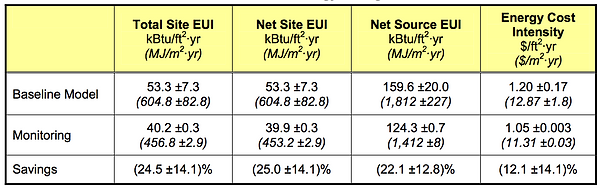
Overall Energy Saving Level
Source: National Renewable Energy Laboratory

HVAC&L Energy Saving Level
Source: National Renewable Energy Laboratory
On-site energy production from the PV system makes it important to distinguish between net and total energy use. Net energy use is the difference between the total energy use and the energy produced by PV. The small difference between net and total site energy use savings occurs because there is only a small amount of PV production. Cost saving levels are not as high as energy saving levels because the Merrill Center is predominantly electric and incurs substantial demand charges; propane is a secondary heat source. The baseline model uses propane-fired heating.
PV System Performance and Evaluation
Methodology
The Merrill Center includes a 4.2-kW, thin-film PV power system that generates electricity. The electricity produced by the inverters is metered where it enters an electrical panel on the second floor. The solar resources are measured with two photometers, one situated horizontally and the other vertically facing south. The system was evaluated by examining the measured electricity generation and by comparison to simulations of the PV system
Result Data
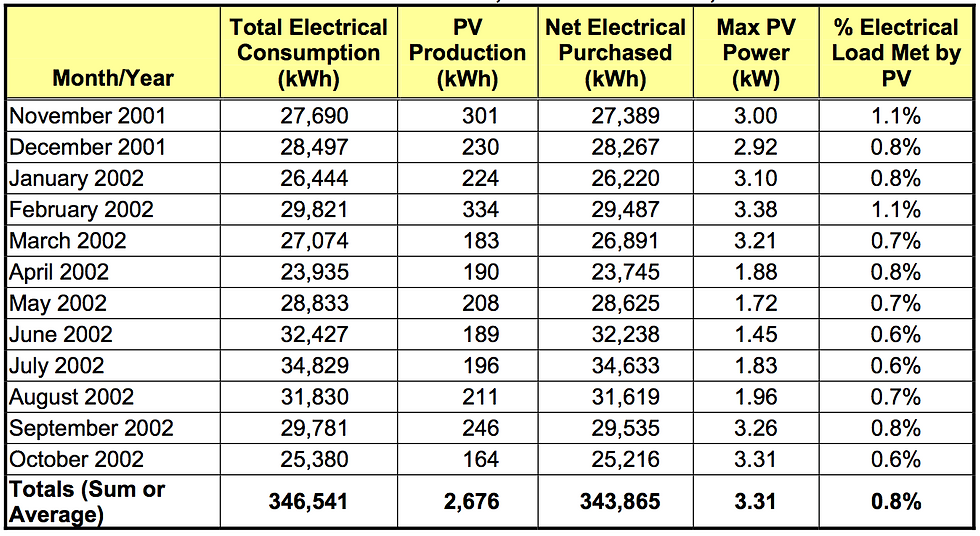
(Source from: National Renewable Energy Laboratory

Source from: National Renewable Energy Laboratory

Source from: National Renewable Energy Laboratory

Source from: National Renewable Energy Laboratory
Qualitative
-
Renewable Energy Use
-
PV System
-
HVAC System
Quantitative
-
Energy Performance of Real Time Data
-
Energy Saving Level
-
PV System Performance and Evalution